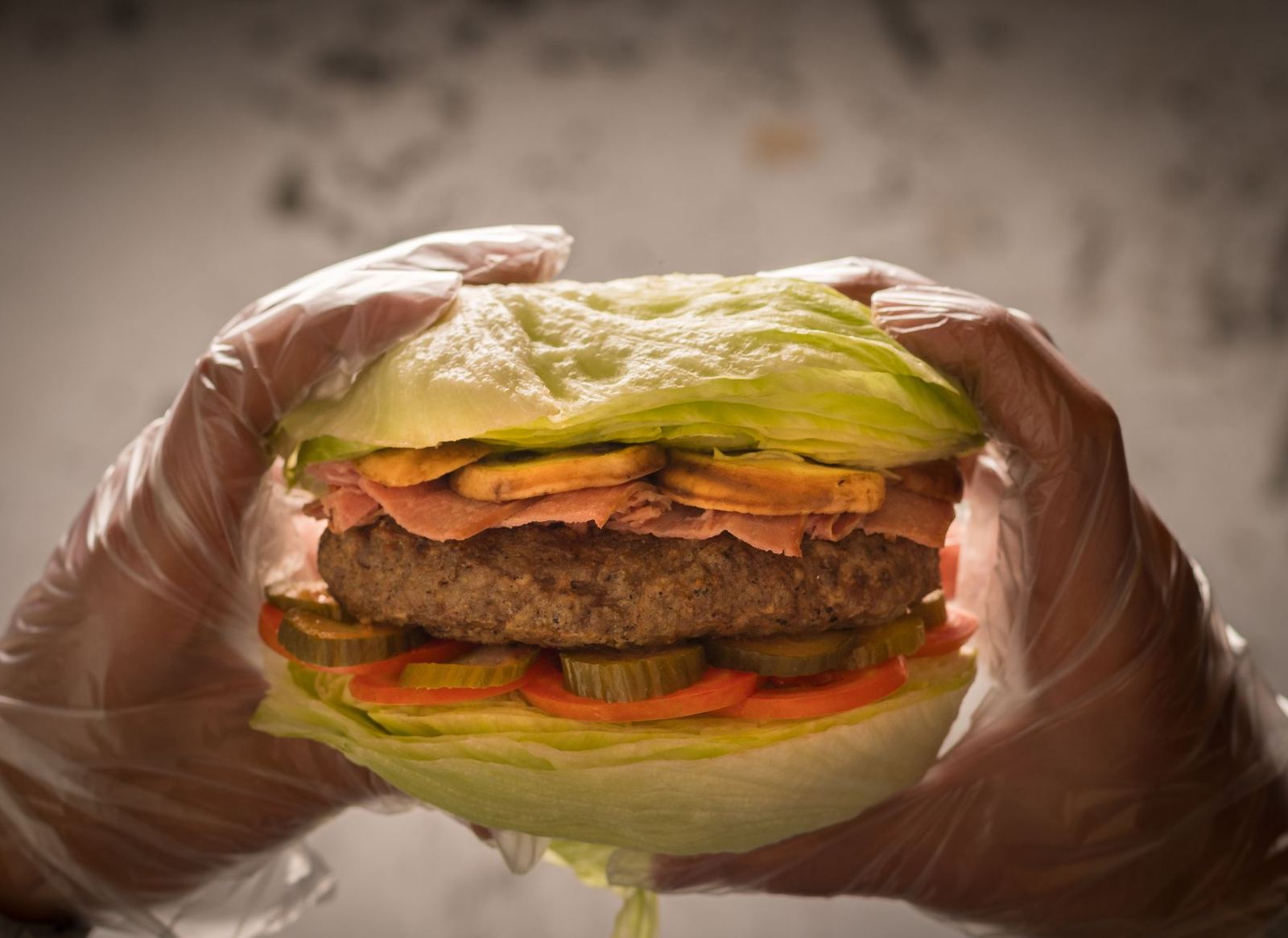
What is lazy keto? It is a relaxed version of the ketogenic diet in which a person counts only carbohydrates, keeps them to a low daily limit, and does not track calories, protein or fat.
That simplicity is the appeal and the weak point. The sections below set out the rules, what the shortcut leaves out and who it might suit, with the full background in the ketogenic diet guide.
What lazy keto means
Healthline calls lazy keto a less restrictive version of the traditional high-fat, very-low-carb ketogenic diet. Traditional keto asks people to follow macronutrient targets closely. Lazy keto keeps only the carbohydrate limit and drops the rest.
A registered dietitian quoted in a Healthline news report gives the most common definition as eating no more than 20 grams of carbohydrates per day without counting calories or tracking the other macronutrients, protein and fat. Other descriptions give a slightly wider limit, so the exact number depends on who is writing the rules.
The wider keto picture is that carbohydrate sits at the bottom of the plan. Cleveland Clinic gives the standard keto split as 70% to 80% fat, 10% to 20% protein and 5% to 10% carbohydrate, so lazy keto is a decision to monitor one of those three numbers and let the others float. People comparing it with a branded plan may find the keto vs atkins comparison useful, since Atkins also centers on a net carb target.
How the rules work in practice
The routine is short. Read labels, count carbohydrate grams, and stop when the daily limit is reached. Healthline says carbohydrates on lazy keto are typically restricted to around 5-10% of total daily calories, or around 20-50 grams per day for most people. Harvard Health‘s description of keto is similar, at fewer than 20 to 50 grams of carbs per day.
Foods follow the same pattern as other keto plans. Healthline lists grains, starchy vegetables, most fruit, legumes, some dairy, sugary foods and sugary drinks as the items to limit or avoid, and meat, fish, eggs, nuts, seeds, oils, high-fat dairy and low-carb vegetables as the staples. Nothing in the plan says how much of any of them to eat.
Counting is easier with net carbs. The Atkins site defines net carbs as total carb grams less fiber grams, and a person following this plan would normally apply the same arithmetic to labels. Labels need a careful read: the Atkins rules say that zero carbs on a label does not mean free of carbs, because manufacturers may round off a product with fewer than 0.5 grams of a carbohydrate, so it shows up as zero. Small amounts add up when the daily limit is this low.
The lack of tracking is also the main reason the plan feels easy. There is no app to open, no ratio to calculate and no calorie budget to manage, which is why it is popular among people who find strict keto hard to keep up.
What the shortcut leaves out
Protein is the first gap. Harvard Health notes that eating too much protein can interfere with ketosis, and Healthline says the same of lazy keto, because the body can convert protein into glucose through a process called gluconeogenesis. A plan that ignores protein cannot guard against this.
Ketosis itself becomes a guess. Healthline points out that, because tracking calories, protein and fat intake and measuring ketones is not required on lazy keto, dieters cannot know whether they are truly in ketosis. Cleveland Clinic defines ketosis as a state in which the body burns fat for energy instead of glucose, and researchers often use urinary ketone levels as an indicator of dietary adherence, as one review describes. Lazy keto skips both the measurement and the macro targets that make such a state likely.

Calories still matter. Healthline says that focusing solely on carbohydrate intake ignores the importance of adequate calorie intake and diet quality. A dietitian quoted in its news report adds that going too low on total calories can present risks no matter the macronutrient ratio, and that without tracking total calorie intake there is no way of knowing whether needs are being met.
Trade-offs and known downsides
Nutrition is one. Healthline says lazy keto limits many nutrient-rich food groups, namely fruits, starchy vegetables, grains and legumes, which may make it difficult to obtain essential vitamins, minerals and fiber. A review of ketogenic diets says they are typically low in fiber, and Harvard Health lists constipation and possible micronutrient gaps among the risks.
Fiber deserves attention in particular. Cleveland Clinic says that experts recommend adults consume 25 to 30 grams of fiber every day and that most people get half that amount, and that animal products have no fiber. A plan built around meat, eggs and cheese, with no rule about vegetables, can drift well below that. Harvard Health’s list of permitted vegetables, which includes leafy greens, cauliflower and broccoli, is a sensible place to start.
Early side effects are another. Healthline lists nausea, headache, fatigue, constipation and dizziness as keto flu symptoms that lazy keto can produce while the body adjusts.
Evidence is the third. Healthline says no studies have been conducted on lazy keto specifically, and the long-term effects of keto diets, especially lazy keto, are unclear because of a lack of research. For weight loss in general, the ketogenic diets review states that, in controlled trials, low-carbohydrate diets appear no more effective than other diets that similarly restrict calories. Food quality is a separate debate, covered in what is dirty keto.
Who lazy keto might suit
Healthline says lazy keto may be an option for those looking for a quick, short-term weight loss solution, and a dietitian quoted in its news report suggests it could be an introductory form of the diet that helps people transition from an old way of eating. In that role it works as a first step before moving to fuller tracking.
It is a poor fit for anyone who needs certainty about ketosis or about nutrition. Healthline warns that reducing carbohydrate intake can lead to dangerously low blood sugar levels if medications are not adjusted, so people with diabetes should be careful. People with diabetes, kidney disease or other medical conditions, anyone who is pregnant and anyone taking medication should talk to a doctor and a registered dietitian before changing their diet, as Harvard Health advises.
The quality of the food matters whichever route is chosen. A dietitian quoted by Healthline says the quality of food is just as important as measuring macronutrients.
Frequently asked questions
How many carbs does lazy keto allow?
Healthline’s report gives the most common definition as no more than 20 grams per day, while its explainer says around 20-50 grams for most people.
Do you need to count calories on lazy keto?
No, the plan has no rules for calories, fat or protein, though dietitians quoted by Healthline caution that ignoring calories carries risks.
Will lazy keto put you in ketosis?
It may, but without ketone measurement or protein tracking there is no way to know, according to Healthline.
Is lazy keto the same as dirty keto?
They overlap and some writers use the terms interchangeably, but lazy keto is about skipping tracking, while dirty keto is about food quality.