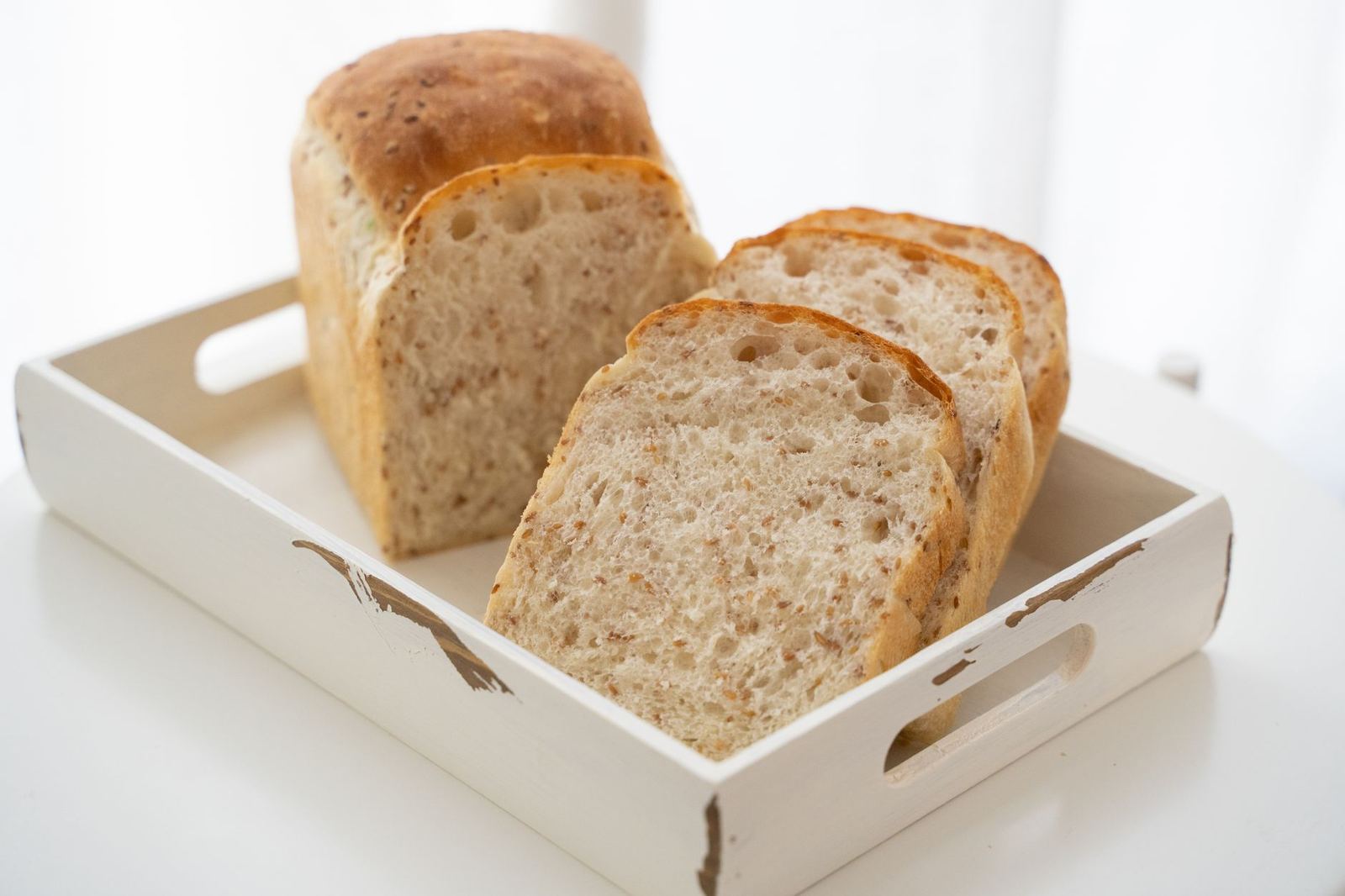
Is bread keto friendly? Regular bread is not: USDA lists commercial white bread at 50.0 g of carbohydrate per 100 g, and 100% whole wheat bread at 44.5 g, so even a thin slice takes a big share of a strict daily limit.
This guide compares white and whole wheat loaves by weight, explains why whole grain is not a loophole, and covers how to read labels on low-carb loaves. Bread is one of the staples sorted on the keto shopping list, which shows how common foods fit a low-carb plan.
Bread carbs by weight
USDA FoodData Central lists commercial white bread with 50.0 g of carbohydrate per 100 g, including 2.2 g of fiber and 7.4 g of total sugars. Its protein is 9.5 g and its fat is 2.84 g per 100 g. Subtracting the fiber leaves 47.8 g of net carbs per 100 g.
The record for 100% whole wheat commercial bread lists 44.5 g of carbohydrate per 100 g, including 5.9 g of fiber and 5.65 g of total sugars, with 12.9 g of protein and 3.5 g of fat. That leaves 38.6 g of net carbs per 100 g.
A loaf is sold by slices, not by 100 g, so the table below also shows a small 30 g portion and a 60 g portion. These are example weights for illustration: slice weights vary widely between brands, and a label gives the true figure for a specific loaf.
| Bread | Net carbs per 100 g | Net carbs per 30 g | Net carbs per 60 g |
|---|---|---|---|
| White, commercial | 47.8 g | 14.34 g | 28.68 g |
| 100% whole wheat, commercial | 38.6 g | 11.58 g | 23.16 g |
Values are calculated from the USDA FoodData Central records for commercial white bread and 100% whole wheat bread, which supply the per-100 g carbohydrate and fiber figures.
How bread fits a daily keto limit
Harvard’s Nutrition Source says the ketogenic diet typically reduces total carbohydrate intake to less than 50 grams a day, and that it can be as low as 20 grams a day. It also lists all whole and refined grains and flour products among the foods the diet avoids. Bread is made from exactly those ingredients.
The numbers explain why. A 60 g portion of white bread carries 28.68 g of net carbs, which is more than a 20 gram day allows, and the same weight of whole wheat carries 23.16 g. A sandwich can therefore use up an entire day’s budget before any filling is added.
Bread also contributes little fat. White bread has 2.84 g of fat per 100 g, while Harvard describes the diet as a strong emphasis on fats at each meal and snack. A slice of bread works against that pattern even when it is counted carefully.
Why whole wheat is not a loophole
Whole grain bread is often the healthier choice on a standard diet, and Harvard’s Nutrition Source recommends eating a variety of whole grains like whole-wheat bread while limiting refined grains like white bread. That advice is about general eating, not about carbohydrate counting. On a ketogenic plan the difference is only a matter of degree: whole wheat still carries 38.6 g of net carbs per 100 g, against 47.8 g for white.
Harvard also notes that white bread contains mostly starch but little fiber. The whole wheat record shows the difference in fiber, 5.9 g against 2.2 g per 100 g, which lowers the net count but leaves a high total.
Harvard adds that grains that have been milled and refined, with the bran and germ removed, have a higher glycemic index, and that finely ground grain is more rapidly digested than coarsely ground grain. Those points are about how quickly a loaf is digested, a separate question from how many carbohydrates it holds, and on a ketogenic plan it is the carbohydrate total that decides whether a loaf fits.
Reading labels on low-carb loaves
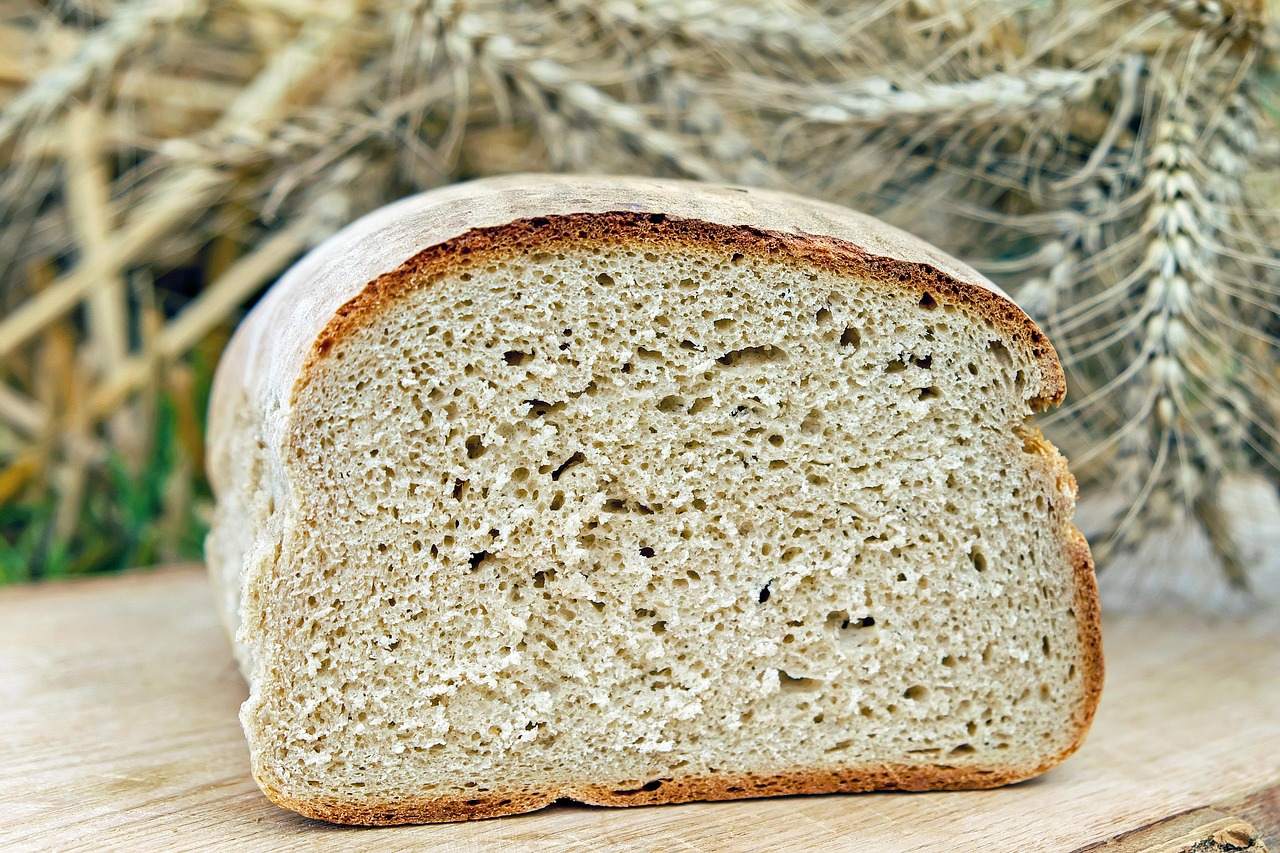
Shops stock loaves marketed as low-carb or keto. These are different products from the commercial bread in USDA’s records, and their carbohydrate content depends on the recipe. The reliable check is the nutrition label: note the serving weight, compare the total carbohydrate with the fiber, and subtract fiber to get net carbs. Harvard’s Nutrition Source explains that high-fiber foods do not contain as much digestible carbohydrate, which is the reasoning behind that subtraction.
Some low-carb loaves are sweetened with sugar alcohols. Harvard says sugar alcohols do not cause sharp rises in blood glucose, although high quantities of certain ones can cause loose stools or diarrhea in some people. One of them is erythritol, covered in the guide to erythritol on keto, and Harvard describes the health effects of low-calorie sweeteners overall as inconclusive.
The slice weight matters as much as the percentage. A label that quotes carbohydrate for a very thin slice can look better than a normal sandwich portion, so comparing per-100 g figures between brands is more honest than comparing per-slice figures.
Bread-free ways to build a meal
Because most of the difficulty is the starch, many low-carb eaters replace bread with foods that do the same job. Lettuce leaves, cucumber rounds and thick tomato slices can wrap or carry fillings, and a plate of eggs, cheese or meat with a salad needs no bread at all. A bowl-style meal built on leafy greens takes the place of a sandwich, with the same fillings on top and no loaf underneath. None of these ideas depends on a special product, and all fit the emphasis on fat and non-starchy vegetables that Harvard’s Nutrition Source describes.
Sweet breads add a second issue, since honey and sugar are often ingredients. The sugar content of honey is covered in the guide to is honey keto friendly, and the same label-reading habit applies to any loaf that lists sweeteners.
When to talk to a clinician
Dropping bread is part of a larger change in eating. Harvard’s Nutrition Source recommends consulting a physician and a dietitian before starting a ketogenic diet. People with diabetes, kidney disease or a pregnancy, and anyone who takes medication, should talk to a clinician before changing how they eat. This page is general information and not medical advice.
Frequently asked questions
How many carbs are in a slice of bread?
It depends on the slice weight, which varies by brand. Based on USDA values for white bread, a 30 g portion has 14.34 g of net carbs.
Is whole wheat bread lower in carbs than white?
Somewhat. USDA lists 5.9 g of fiber and 38.6 g of net carbs per 100 g for whole wheat bread, against 47.8 g of net carbs for white, but both are high.
Does Harvard recommend whole grain bread?
For general eating, yes: Harvard’s Nutrition Source says to eat a variety of whole grains like whole-wheat bread and to limit refined grains like white bread. A ketogenic plan, which avoids all whole and refined grains, is a separate pattern.
Can I trust the net carbs on a low-carb loaf?
Check the serving weight and the fiber line on the label, and compare brands by weight rather than by slice. Harvard’s Nutrition Source explains that high-fiber foods do not contain as much digestible carbohydrate, which is why fiber is subtracted.