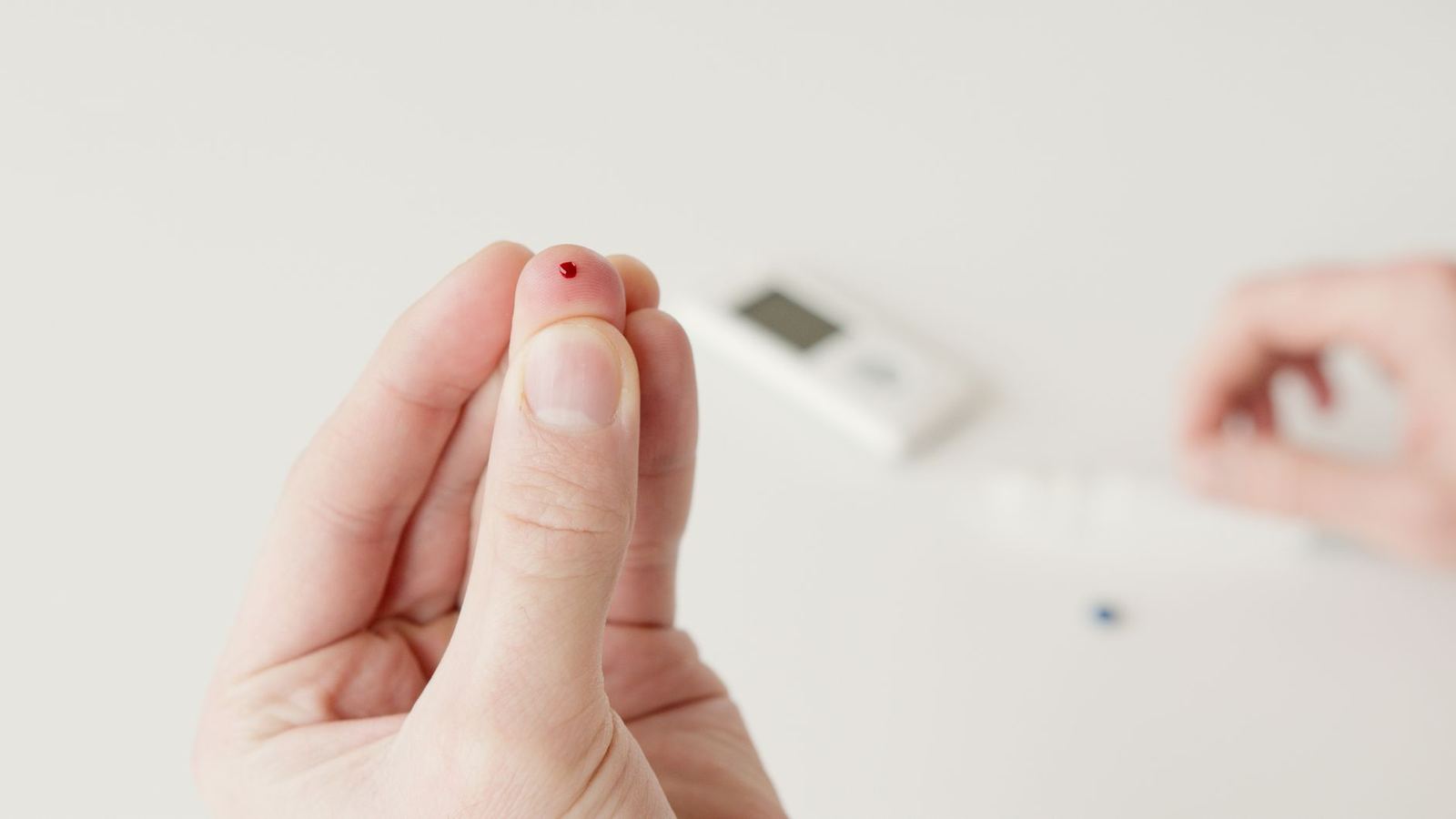
A blood ketone meter measures beta-hydroxybutyrate (BHB), the main ketone body, in a small capillary blood sample. It is the most direct way to check whether a low-carbohydrate diet has actually produced ketosis.
It is one of several ways to confirm the signs of ketosis, alongside urine and breath tests. This page explains what a blood reading measures, what the ranges mean and where the method falls short.
What a blood ketone meter measures
When the body runs mainly on fat, the liver produces three ketone bodies: acetoacetate, acetone and BHB. A review of ketone testing explains that these can be measured in blood, urine and breath, one for each sample type. A blood ketone meter reads the first of those, and it reads BHB specifically. That choice is not arbitrary. The same review states that BHB is the most abundant ketone body in circulation, so a reading of BHB reflects the largest part of what the liver is producing.
The reading is a concentration expressed in millimoles per litre of blood, written mmol/L. It is a number, not a colour or a yes-or-no result, and that is what separates it from the cheaper alternatives. A number can be compared from day to day and from person to person in a way that a shade on a strip cannot, as long as the conditions around the reading are similar.
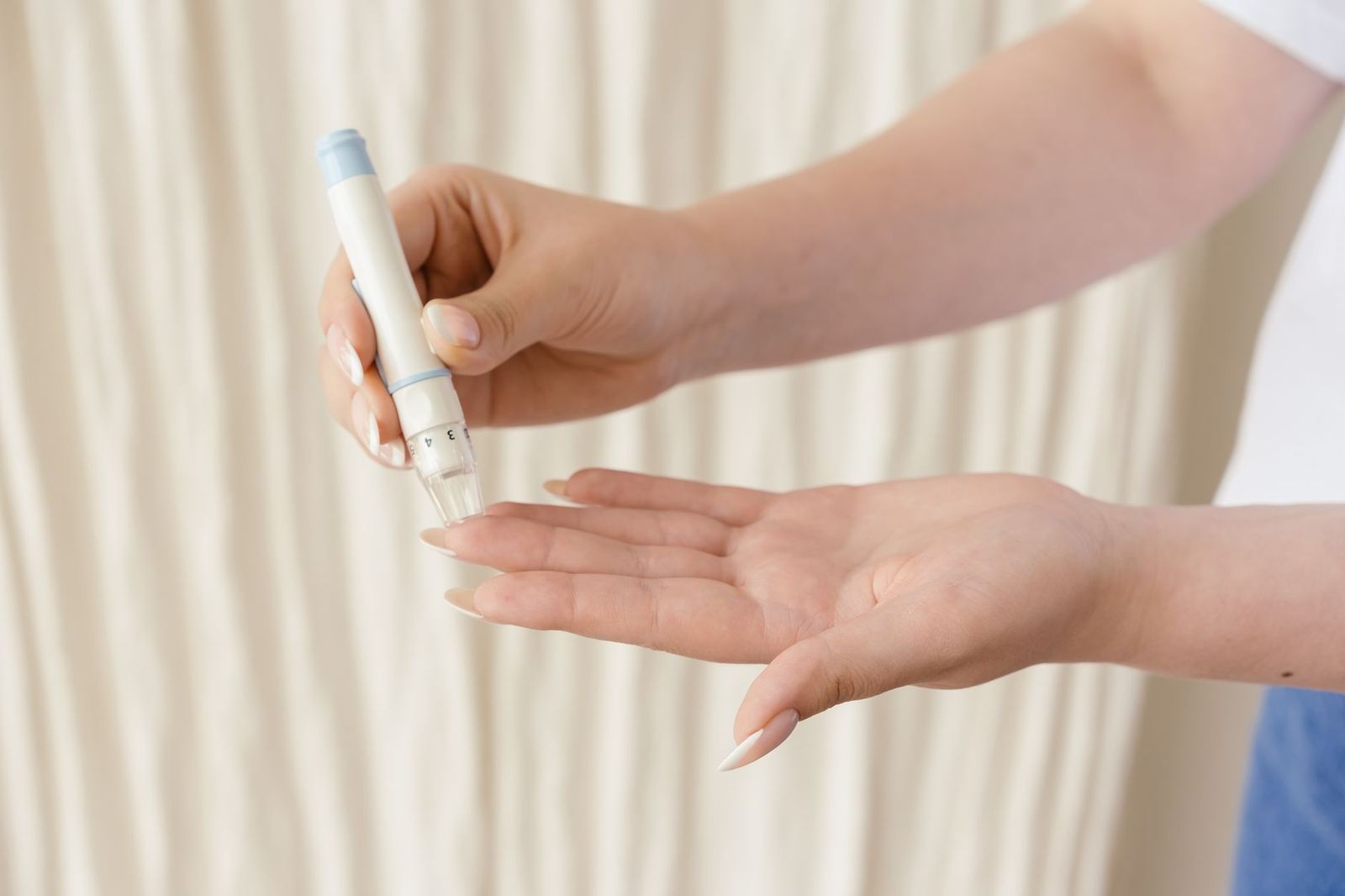
The sample is taken from a fingertip, which is why the review lists the method as a fingerstick measurement of capillary blood. Because the reading comes from circulating blood, it reflects the situation at that moment, and the review describes it as reflecting real-time metabolic state.
Reading the numbers
The most useful thing to know is where the thresholds are. The review defines nutritional ketosis as a BHB concentration of 0.5 to 5.0 mmol/L in blood. That is a wide band, and the review does not treat everything inside it as equal. Authors of one study describe a lower segment as light ketosis, and in a crossover trial that it summarises, participants’ average BHB levels remained within the light nutritional ketosis range of 0.5 to 1.5 mmol/L for most of the weeks measured.
Another study that used frequent readings reports how quickly people moved into the range. Participants reached light ketosis at 0.5 to 1.0 mmol/L within 1 to 7 days, and a higher range of 1 to 3 mmol/L within 3 to 13 days. Those figures describe one group of people following one programme, so they are better read as an example of the spread than as a schedule. Two people on the same plan can sit at very different points for the same number of days.
A single reading is a snapshot. In the study that tracked people closely, participants measured BHB three times daily, and a day in ketosis was defined as a mean daily BHB of at least 0.5 mmol/L. The practical lesson is that one low number at one moment is weak evidence, while a pattern across several days says much more about what is going on. If you test, it helps to write down the time of day and what you last ate, so that the numbers can be compared fairly.
Higher is not better in any simple sense. The same range that defines nutritional ketosis sits far below the levels seen when something has gone wrong. A conference report on ketone monitoring states that normal BHB levels are usually below 0.5 mmol/L, but in diabetic ketoacidosis they can rise to 3 mmol/L or more. Cleveland Clinic draws the same boundary in words: in ketosis you have ketones in your blood but not enough to turn your blood acidic. Anyone with diabetes should treat a high reading as a reason to seek medical advice rather than as an achievement.
Why blood testing is treated as the reference method
The review sets out the main testing options side by side. For fingerstick blood BHB, it lists the strengths as accurate, reliable and reflecting real-time metabolic state and it calls the method the gold standard for monitoring ketosis. Its listed drawbacks are that the test is invasive and relatively costly, depending on how often you test.
The alternatives are weaker for specific reasons. Urine strips detect a different molecule, and the conference report points out that urine testing only detects acetoacetate and acetone and not the most important ketone, BHB. That is a basic limitation, and it is covered further in the guide to ketone urine strips. Continuous monitors that sample interstitial fluid are described as showing trends and fluctuations, but the review notes that they are less accurate and less reliable than capillary ketone testing.
That is the sense in which blood testing is a reference. It does not mean the reading is perfect or that everyone needs one. It means that when the question is whether a person is truly in ketosis, a blood BHB value is the measurement other methods are compared against.
Limits, costs and open questions
Blood meters have their own drawbacks. The review remarks that despite the increasing availability of capillary blood BHB meters and test strips, BHB testing remains relatively costly compared with glucose or urine ketone testing. Because meters need a strip for each reading, cost scales with how often you test, so testing often adds up.
There are also genuine unknowns. The review lists several, including the optimal frequency of testing, the absence of standardized reference ranges across diverse populations, and the lack of defined targets for different therapeutic goals. In plain terms, nobody can say how often you must test or which number you should aim for. Published ranges are guides drawn from studies, not personal targets.
Finally, the instrument is only as good as its use. A conference report on ketone monitoring notes that strips may be inaccurate because they have been stored improperly, such as in a bathroom with high humidity. If a result looks inconsistent with how you feel, repeating it is more sensible than acting on it.
Blood readings and weight-loss plateaus
People often ask whether a higher ketone number means faster weight loss. The evidence is thin. One analysis of a remote-care programme found that a mean BHB of approximately 0.5 mmol/L over the first 90 days was the optimal threshold for achieving at least 10% weight loss at one year, with higher average levels associated with greater weight loss. The review immediately qualifies this: these correlations remain exploratory and are often limited by small sample sizes and observational, retrospective designs, and more robust controlled studies are needed to decide whether specific thresholds are needed for benefit.
So a meter can show whether you are in ketosis, but it cannot tell you why the scale has stopped moving. If your readings look as expected and your weight has stalled, the explanations lie elsewhere, and the common ones are collected in our guide to a keto weight loss plateau.
Who should involve a clinician
Home ketone testing is not a replacement for medical care. People with diabetes, kidney disease or on regular medication, and anyone who is pregnant, should talk to a clinician before changing their diet or relying on a meter. The review itself says that these diets should be implemented with appropriate clinical oversight because of possible digestive problems and electrolyte imbalance. Diabetes-related ketoacidosis, in Cleveland Clinic’s words, is life-threatening and requires immediate medical attention, so feeling seriously unwell is a reason to seek help whatever the meter says.
Frequently asked questions
Is a blood ketone meter the same as a glucose meter?
No. A glucose meter measures blood sugar, while a ketone meter measures BHB. The two numbers answer different questions.
When is the best time to test?
There is no single agreed time, and the review lists testing frequency as an open question. Using the same time of day and noting your last meal makes readings easier to compare.
Does a low reading mean the diet is not working?
Not necessarily. A single low value is a weak signal, particularly in the first days, and many factors affect it. Looking at a run of readings, and at how you feel, is more informative than any one result.
Do I need a meter to follow a low-carb diet?
No. Many people follow low-carbohydrate diets without testing. A meter is an optional tool for people who want objective feedback.